08069841500
 support@drpratim.com
Follow Us :
08069841500
support@drpratim.com

If there’s one tiny body glitch that can turn a normal day into a hilarious nuisance, it’s hiccups. One minute you’re sipping water peacefully, and the next – hic! – you’re suddenly the main character in a cartoon.
But what exactly causes this quirky reflex? And why do some hiccups disappear in seconds while others hang around just long enough to embarrass you in a meeting?
Let’s break it down in a friendly, fun, and science-made-simple way.

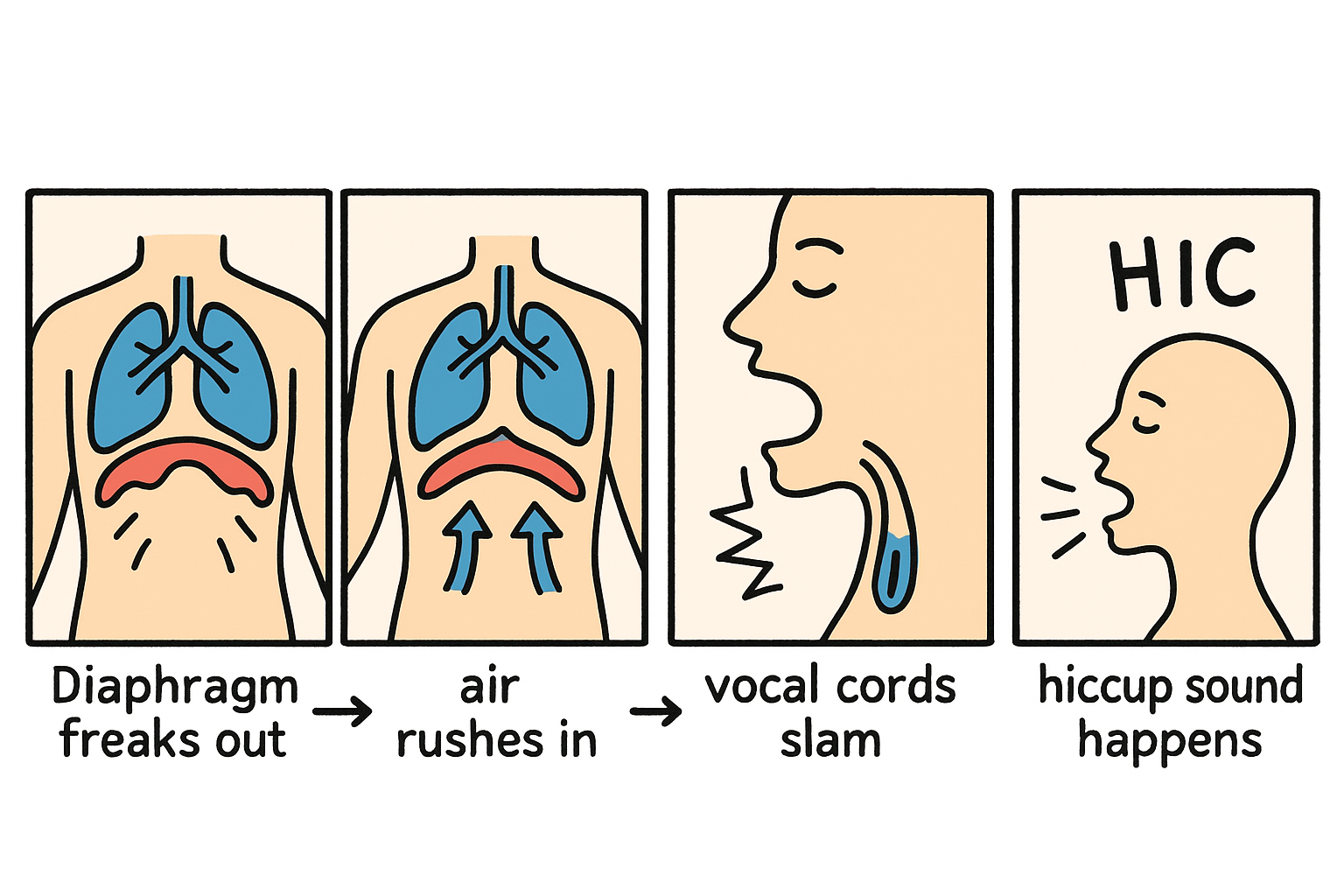
Hiccups happen when your diaphragm – a big dome-shaped muscle that helps you breathe – goes into a sudden, involuntary spasm.
This quick contraction pulls air into your lungs, and your vocal cords snap shut, creating the signature sound: “hic!”
Basically:
Diaphragm freaks out ➝ air rushes in ➝ vocal cords slam ➝ hiccup sound happens.
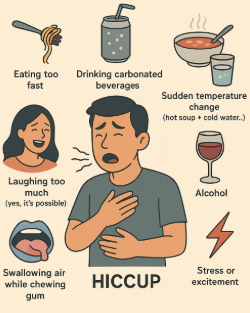
It’s often triggered by something small that irritates the diaphragm or the nerves around it. Common culprits include:
For most people, it’s harmless. Annoying? Yes. Dangerous? Almost never.
Impressed? So were we.
Tired of the hic-hic-hic loop? Try these science-backed, harmless remedies. They work by resetting your diaphragm or stimulating your vagus nerve (the “calm down” nerve).
✔️ 1. Sip Cold Water Slowly
This relaxes the diaphragm and sends a reset signal.
✔️ 2. Hold Your Breath for 10–20 Seconds
Simple, classic, and surprisingly effective.
✔️ 3. Breathe Into a Paper Bag
Increases carbon dioxide levels, which can stop the spasms.
(Don’t use a plastic bag.)
✔️ 4. Swallow a Teaspoon of Sugar
Grainy texture interrupts the nerve pathways involved in the hiccup reflex.
✔️ 5. Gargle Cold Water
Stimulates the throat and the vagus nerve.
✔️ 6. Light Pressure
✔️ 7. Sudden Distraction
Being startled or laughing loudly sometimes “breaks the loop.”
Rarely, hiccups lasting more than 48 hours (called persistent hiccups) could be linked to:
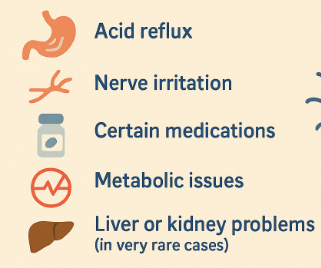
If they’re long-lasting, painful, or affecting your sleep, talk to a doctor – just to be safe.
Hiccups are one of those charming human quirks: useless, harmless, and randomly hilarious. Most disappear on their own, but a few smart tricks can stop them in seconds. Next time your diaphragm decides to go rogue, you’ll know exactly what to do!

© 2025, Dr. Pratim. All Rights Reserved. Powered By NCIL IT Team