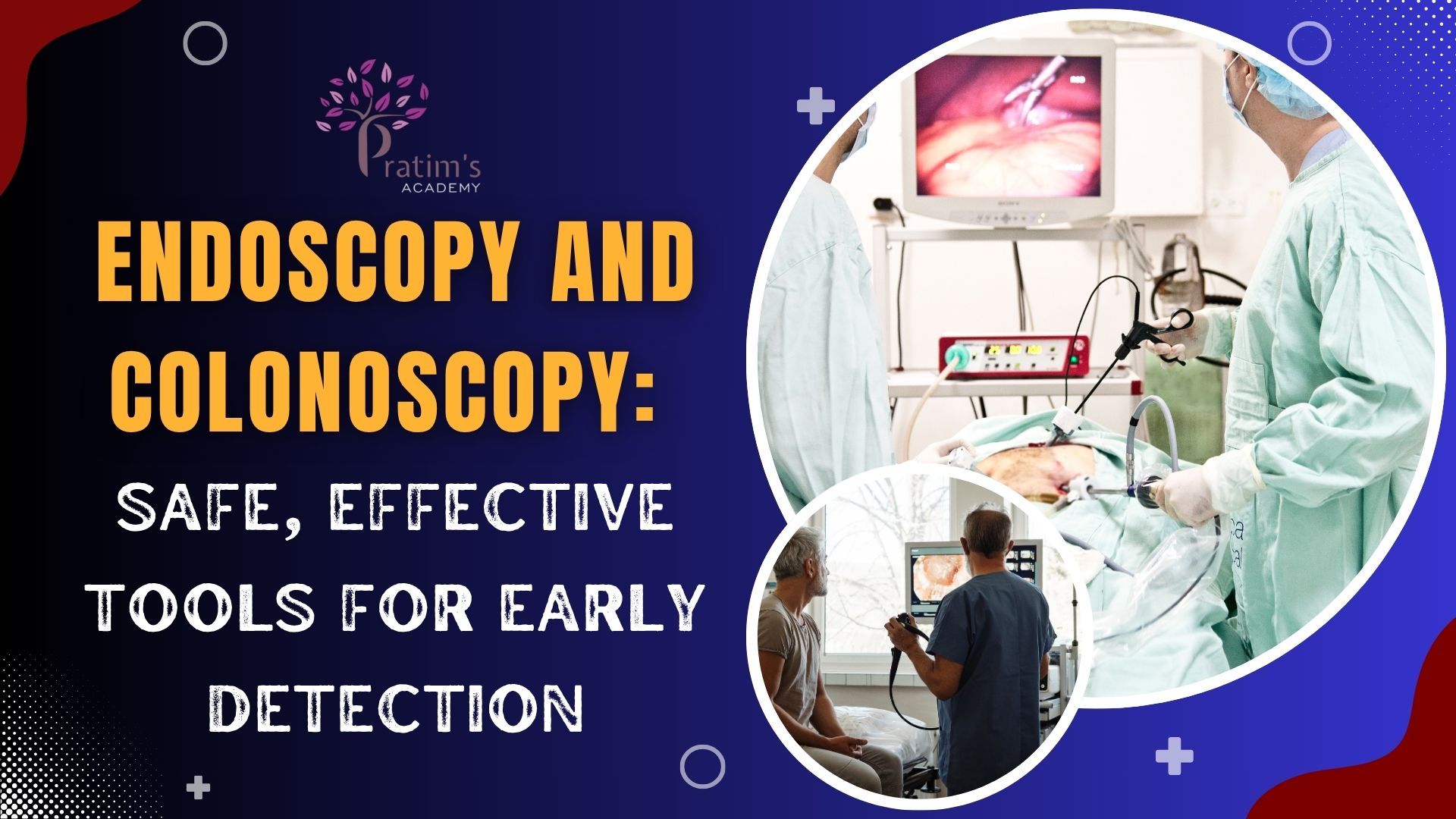
Endoscopy and Colonoscopy:Effective Tools for Early Detection
If you’ve been advised to undergo an endoscopy or colonoscopy, you might feel a little anxious — but there’s no need to worry. These are safe, commonly performed procedures that help doctors take a close look inside your digestive tract without the need for surgery. They allow early detection of ulcers, inflammation, and even cancer, ensuring timely treatment and peace of mind.
This article will walk you through everything you need to know — from preparation and the procedure itself to recovery and common FAQs.
What is an Endoscopy?
Definition:
An endoscopy is a medical procedure that uses a flexible tube with a camera (called an endoscope) to examine the upper part of the digestive system — the oesophagus, stomach, and duodenum (the first part of the small intestine).
Purpose:
Endoscopy helps doctors:
- Investigate symptoms like persistent heartburn, nausea, vomiting, abdominal pain, bleeding, or swallowing difficulties.
- Detect ulcers, gastritis, tumours, polyps, or infections.
- Collect tissue samples (biopsies) for laboratory testing.
What is a Colonoscopy?
Definition:
A colonoscopy uses a similar flexible, camera-equipped tube (called a colonoscope) to examine the colon (large intestine) and rectum.
Purpose:
Doctors perform a colonoscopy to:
- Screen for colon cancer or detect precancerous polyps.
- Additionally, doctors may investigate causes of rectal bleeding, chronic diarrhoea, constipation, or unexplained weight loss.
- Diagnose inflammatory bowel diseases (IBD) such as Crohn’s disease or ulcerative colitis.
Preparation for Endoscopy and Colonoscopy
Proper preparation is key to obtaining clear and accurate results.
- Fasting:
Patients undergoing endoscopy may be asked to fast for 6–8 hours beforehand to keep the upper GI tract clear.
- Bowel Cleansing (for Colonoscopy):
A special diet and laxatives are prescribed 1–2 days before the procedure to completely clean the colon.
- Medication Adjustments:
Some medications, such as blood thinners or diabetes medicines, may need to be paused or adjusted (only under your doctor’s guidance).
- Transportation:
As sedation is often given, it’s best to arrange for someone to drive you home afterward.
During the Procedure
- Sedation:
Mild sedation or anaesthesia keeps patients relaxed and comfortable throughout.
- Duration:
- Endoscopy: 15–30 minutes
- Colonoscopy: 30–60 minutes
- Process:
- Endoscopy: The endoscope is passed through the mouth.
- Colonoscopy: The colonoscope is inserted through the rectum.
If needed, the doctor can remove tissue samples or polyps during the same procedure.
After the Procedure
- Recovery:
Most patients can go home the same day after resting briefly.
- Temporary Effects:
Mild bloating, a sore throat (after endoscopy), or abdominal cramps may occur; however, these typically subside within a few hours.
- Results:
Doctors may share preliminary findings immediately, while biopsy results usually take a few days.
Risks and Safety of Endoscopy and Colonoscopy
Both endoscopy and colonoscopy are generally safe. Complications are rare but can include:
- Minor bleeding (especially after biopsy or polyp removal)
- Very rare perforation (tear in the intestinal wall)
- Reaction to sedation
Frequently Asked Questions About Endoscopy and Colonoscopy
- Is the procedure painful?
No. Sedation ensures comfort, and most patients feel little to no pain.
- How often should a colonoscopy be done?
For average-risk adults, every 10 years starting at age 45–50 is recommended. Those with higher risk factors may need more frequent screening.
- Can these tests detect cancer?
Yes. Both procedures can identify early changes in the digestive tract, allowing for early intervention and treatment.
Conclusion
Endoscopy and colonoscopy are powerful diagnostic tools in modern gastroenterology. With proper preparation and clear communication with your healthcare provider, these procedures can be smooth, safe, and reassuring — paving the way for early detection and better digestive health.
 08069841500
 support@drpratim.com