08069841500
 support@drpratim.com
Follow Us :
08069841500
support@drpratim.com

Every morning, 52-year-old Rajesh, an IT professional, would rush from his bed to his office desk with barely any physical activity in between. When a routine health check-up revealed early chronic kidney disease and high blood pressure, his doctor prescribed medications, advised dietary modifications, and stressed the importance of maintaining optimal blood pressure control. Alongside these measures, Rajesh was encouraged to adopt a simple habit—walking regularly.

What seemed like a small lifestyle change gradually became an important part of his overall kidney care plan, helping him stay active, improve his fitness, and support his long-term health.
When people think about kidney health, they often focus on drinking water, controlling blood sugar, or reducing salt intake. While these are important, regular physical activity is equally essential. Among all forms of exercise, walking stands out as one of the simplest, safest, and most effective ways to support kidney health.

Walking requires no expensive equipment, no gym membership, and can be done almost anywhere. Just a comfortable pair of shoes and a commitment to your health can get you started.

1. Supports Heart Health
Kidneys and the heart work closely together. People living with chronic kidney disease (CKD), especially those on dialysis, have a higher risk of developing cardiovascular diseases.
Walking improves blood circulation, strengthens the heart, and helps blood flow efficiently throughout the body. A healthier heart means better blood supply to the kidneys, helping them function more effectively [2,4].
2. Helps Control Blood Pressure
High blood pressure is both a cause and a consequence of kidney disease. Regular walking can help maintain healthy blood pressure levels, reducing stress on the kidneys and slowing the progression of kidney damage [2].
3. Improves Physical Function and Muscle Strength
Walking keeps the body’s large muscle groups active, promoting better circulation. Improved blood flow helps deliver oxygen and nutrients to vital organs, including the kidneys [1,2].
4. Assists in Weight Management
Being overweight increases the risk of diabetes, hypertension, and kidney disease. Walking burns calories, supports weight control, and contributes to better metabolic health [5].
5. Reduces Stress and Boosts Mental Well-being
Living with a chronic illness can be physically and emotionally challenging. Regular physical activity has been linked to reduced stress, improved mood, and better sleep quality, all of which contribute to overall well-being [2,5].

One of the landmark studies evaluating walking in patients with advanced pre-dialysis CKD was conducted by Kosmadakis and colleagues. The researchers demonstrated that a structured walking program improved exercise capacity, walking distance, and physical functioning in patients with stages 4 and 5 CKD [1].
Subsequent systematic reviews have confirmed that exercise interventions in CKD patients can improve cardiorespiratory fitness, physical function, muscle strength, and quality of life without significant adverse effects when appropriately prescribed [2,5].
Patients undergoing dialysis often experience fatigue, muscle weakness, reduced mobility, and poor exercise tolerance. For many years, these patients were advised to rest; however, modern evidence suggests that carefully supervised physical activity can provide substantial benefits [2,3].
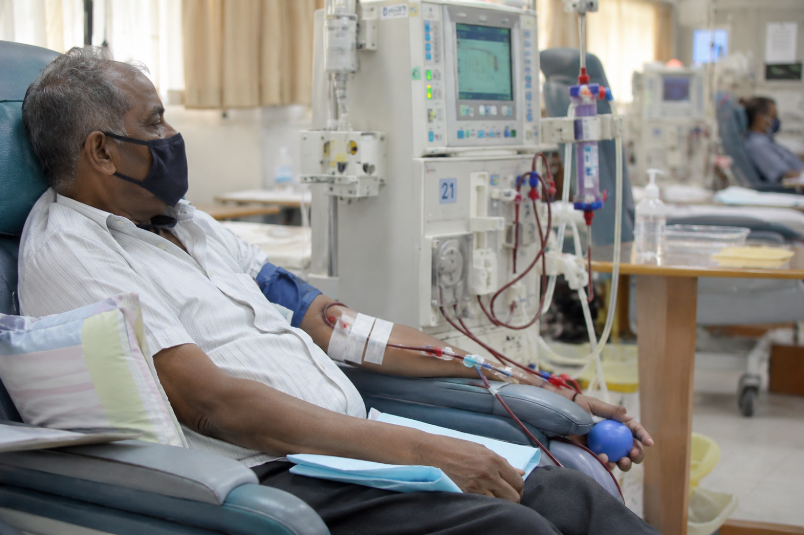
Studies have shown that regular walking and other aerobic exercises can improve physical functioning, exercise capacity, cardiovascular fitness, and quality of life among dialysis patients [3]. Some dialysis centers even encourage intradialytic exercise—light exercise performed during dialysis sessions under professional supervision [3].

Walk for your health… Walk for your kidneys – Walkathon 🚶♀️🚶♂️
Every December, we are delighted to organise this fantastic event and make it a memorable journey together! 🌿✨
Want to be a part of it? Stay tuned to our Nephro care India Ltd. website for updates and registration details.
Nevertheless, dialysis patients should always discuss exercise plans with their nephrologist or dialysis team before beginning a new activity program.
Health experts generally recommend about 30 minutes of moderate physical activity on most days of the week.
If 30 minutes at a stretch feels difficult, start with:
The key is consistency rather than intensity. Even small increases in daily movement can make a meaningful difference over time [6].
Hydration is important during physical activity. However, individuals with kidney disease, especially those on dialysis, may have fluid restrictions.
Before increasing your water intake:
During warm weather:

Although walking is generally considered a safe form of exercise, there are situations in which kidney patients should postpone or modify physical activity [4,5]:

Patients experiencing dizziness, chest discomfort, excessive breathlessness, or unusual symptoms while exercising should stop immediately and seek medical advice.

It is important to remember that walking does not cure chronic kidney disease. Effective CKD management requires a comprehensive approach involving prescribed medications, blood pressure control, blood sugar management when applicable, dietary modifications, smoking cessation, and regular medical follow-up [4].

© 2025, Dr. Pratim. All Rights Reserved. Powered By NCIL IT Team