08069841500
 support@drpratim.com
Follow Us :
08069841500
support@drpratim.com
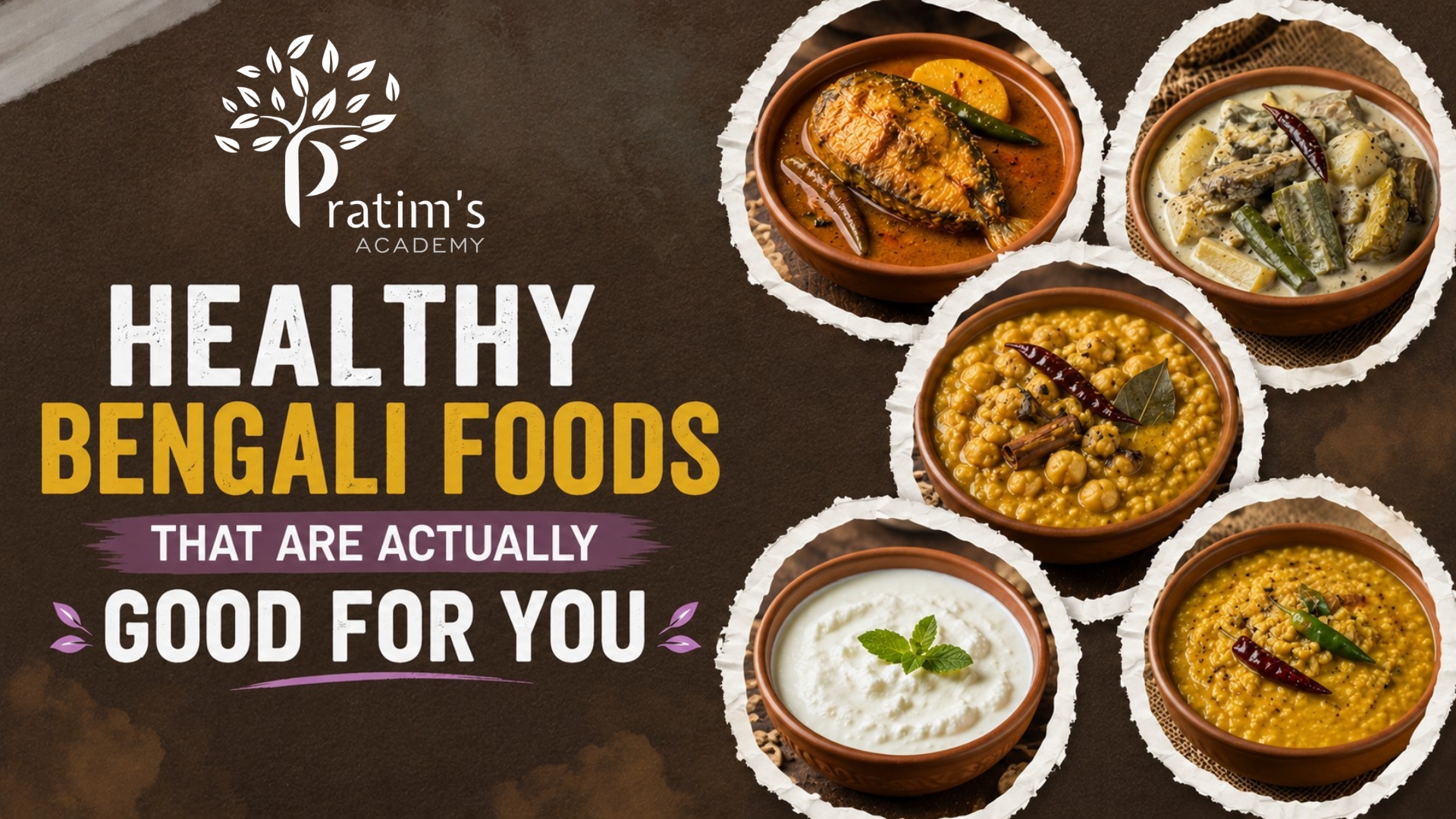
When people think about healthy eating, Bengali cuisine is often unfairly overlooked. Many assume that Bengali food is synonymous with oil, sweets, fried snacks, and rich curries. While these foods certainly exist in Bengali culinary culture, they represent only a small part of a much larger and remarkably nutritious food heritage.

Traditional Bengali cuisine evolved around seasonal vegetables, freshwater fish, fermented foods, pulses, herbs, and minimally processed ingredients. In fact, many classic Bengali dishes align surprisingly well with modern nutritional science.
Let’s explore some authentic Bengali foods that are not only delicious but also genuinely beneficial for health.
Shukto is a mildly bitter vegetable preparation made with ingredients such as bitter gourd, raw banana, drumstick, brinjal, sweet potato, and ridge gourd.

Bitter vegetables contain bioactive compounds that may support glucose metabolism and digestive health. The diverse mixture of vegetables provides:
• Dietary fibre
• Vitamins A and C
• Potassium
• Antioxidants
• Phytochemicals
The high fibre content promotes satiety and supports healthy gut microbiota.
Roasted moong dal is a common part of Bengali meals.
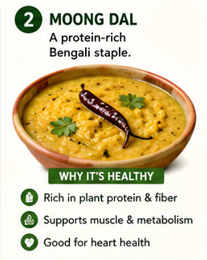
Moong dal is rich in:
• Plant protein
• Complex carbohydrates
• Folate
• Magnesium
• Iron
Unlike many refined carbohydrate foods, dal produces a slower rise in blood sugar and contributes to muscle maintenance and overall metabolic health.
Traditional Bengali fish curry, especially when prepared with minimal oil, is one of the healthiest dishes in Indian cuisine.
Common fishes include:
• Rohu
• Catla
• Hilsa
• Pabda
• Tangra
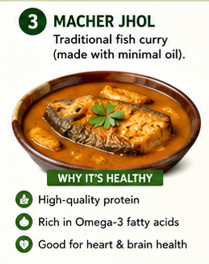
Fish provides:
• High-quality protein
• Omega-3 fatty acids
• Vitamin D
• Vitamin B12
• Selenium
Scientific research consistently links fish consumption with improved cardiovascular health and reduced inflammation.
Bottle gourd, known as lau, is frequently used in Bengali households.
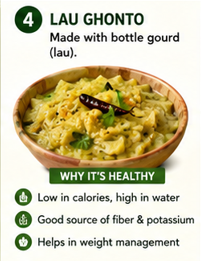
Bottle gourd contains:
• Over 90% water
• Very few calories
• Dietary fiber
• Potassium
It helps maintain hydration while contributing to fullness without excessive calorie intake.
Leafy vegetables are central to traditional Bengali cooking.
Popular examples include:
• Pui shaak
• Lal shaak
• Palong shaak
• Kolmi shaak
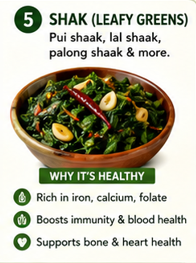
These greens are rich sources of:
• Iron
• Calcium
• Folate
• Vitamin K
• Antioxidants
Regular consumption of leafy vegetables has been associated with improved cardiovascular and metabolic health.
Though often served during festivals, cholar dal offers more than just flavour.
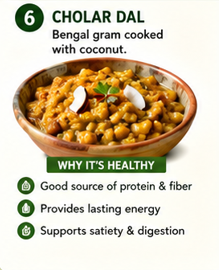
Bengal gram provides:
• Protein
• Fiber
• B vitamins
Moderate amounts of coconut contribute:
• Healthy fats
• Manganese
• Antioxidants
When prepared with controlled oil and sugar, it becomes a nutrient-dense dish.
Traditional curd remains one of the healthiest foods found in Bengali households.
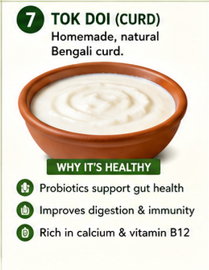
Curd contains beneficial bacteria that support:
• Gut microbiome balance
• Digestion
• Immune function
It also provides:
• Protein
• Calcium
• Vitamin B12
Emerging research suggests that a healthy gut microbiome may influence everything from immunity to mental well-being.
Chochori combines multiple vegetables into a single dish.
Common ingredients include:
• Pumpkin
• Brinjal
• Radish
• Beans
• Potato
• Leafy greens
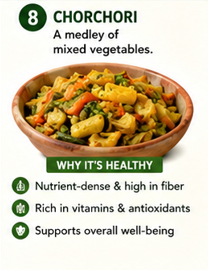
Eating a variety of vegetables increases intake of:
• Vitamins
• Minerals
• Antioxidants
• Fiber
Nutritional diversity is one of the strongest predictors of a healthy diet.
Although more common in some regions than others, sattu is increasingly becoming popular among health-conscious Bengalis.
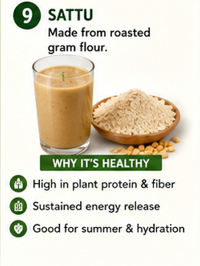
Sattu provides:
• Plant protein
• Fiber
• Iron
• Complex carbohydrates
It delivers sustained energy without causing rapid blood sugar spikes.
Traditional Bengali households often consumed fruits according to season rather than availability.
Examples include:
• Guava
• Papaya
• Mango
• Jamun
• Litchi
• Wood apple
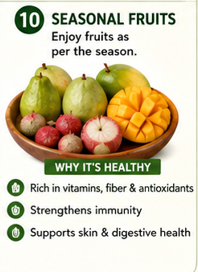
Seasonal fruits provide:
• Vitamin C
• Antioxidants
• Fiber
• Natural phytochemicals
Studies consistently show that higher fruit consumption is associated with lower risk of chronic diseases.
Even within Bengali cuisine, moderation matters.
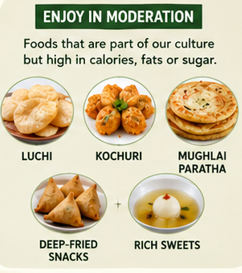
Consume occasionally:
• Luchi
• Kochuri
• Mughlai paratha
• Deep-fried snacks
• Rich sweets such as rosogolla, chomchom, and pantua
These foods are part of cultural celebrations and can absolutely fit into a healthy lifestyle when consumed mindfully.
The healthiest Bengali meals generally share five characteristics:

This pattern closely resembles many dietary models recommended today for metabolic health, cardiovascular protection, and healthy aging.
The truth is that Bengali cuisine can be incredibly healthy when prepared traditionally. Long before the terms “functional foods,” “gut health,” and “plant-based nutrition” became popular, Bengali households were already cooking meals rich in vegetables, pulses, fish, fermented foods, and seasonal produce.

Rather than abandoning traditional foods, the smarter approach is to rediscover them.
After all, some of the healthiest foods on your plate may not come from modern diet trends-they may already exist in your grandmother’s kitchen.

© 2025, Dr. Pratim. All Rights Reserved. Powered By NCIL IT Team