08069841500
 support@drpratim.com
Follow Us :
08069841500
support@drpratim.com
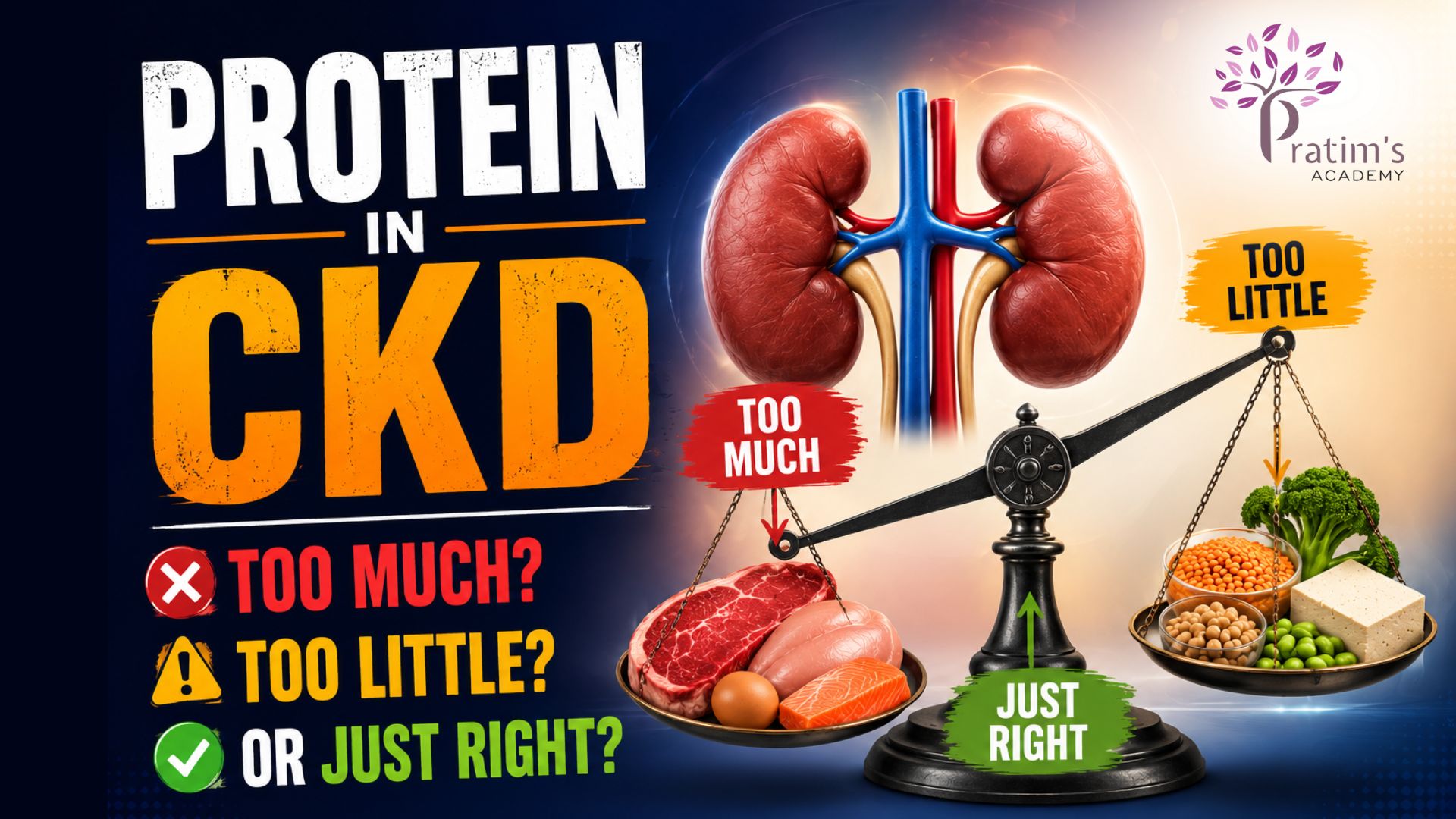
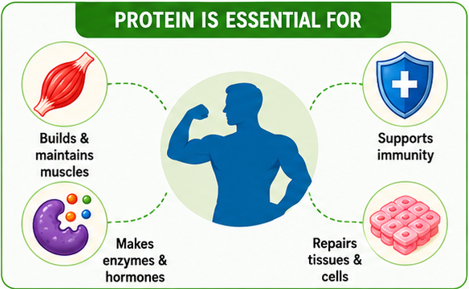
Protein is an essential nutrient that our body needs every day. It helps maintain muscle mass, supports immunity, aids tissue repair and wound healing, and plays an important role in the production of enzymes and hormones. Since proteins are made up of amino acids and are involved in almost every bodily function, they cannot be completely avoided—even in people with Chronic Kidney Disease (CKD).
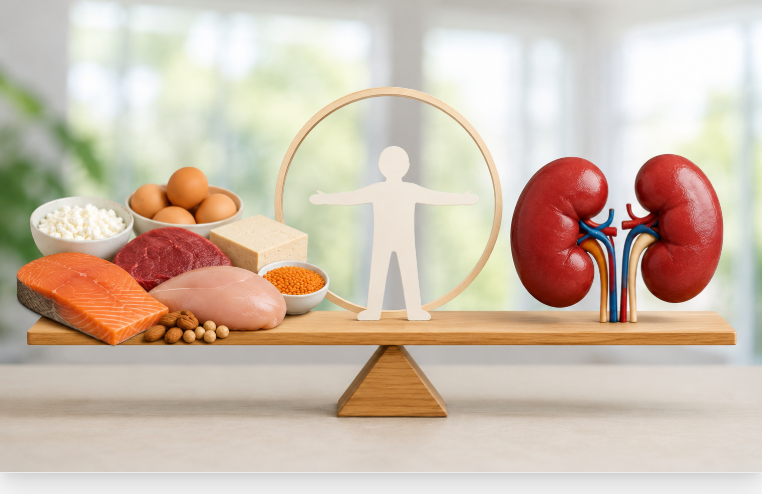
When it comes to CKD, protein intake becomes a careful balancing act. The body still needs protein to stay strong and prevent malnutrition, but consuming too much or choosing unsuitable protein sources can increase the workload on already damaged kidneys.
For this reason, CKD nutrition is not about eliminating protein. Instead, it focuses on consuming the right amount of protein, choosing appropriate sources, and tailoring intake according to an individual’s kidney function and overall health.
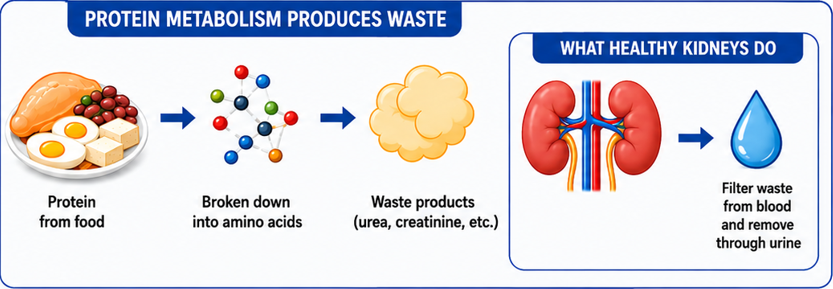
After eating protein-rich foods such as meat, fish, eggs, milk, pulses, legumes, or soy products, the digestive system breaks them down into amino acids.
These amino acids are then absorbed into the bloodstream and used by the body for:
During this process, waste products such as urea, creatinine, uric acid, and other metabolic by-products are also produced.
In healthy individuals, the kidneys efficiently filter these waste products from the blood and remove them through urine.
Apart from filtering waste, the kidneys also:
These functions help keep the body’s internal environment stable and healthy.
In Chronic Kidney Disease, kidney function gradually declines over time. As the kidneys lose their filtering capacity, they become less effective at removing waste products, excess fluid, and toxins from the blood.
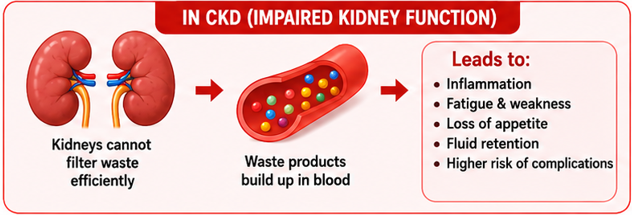
As a result, these substances start to build up in the body. This accumulation can contribute to symptoms and complications such as:
These problems often become more noticeable as CKD progresses.
The build-up of toxins in the body may also trigger chronic inflammation. Persistent inflammation is a major concern because it is linked to:
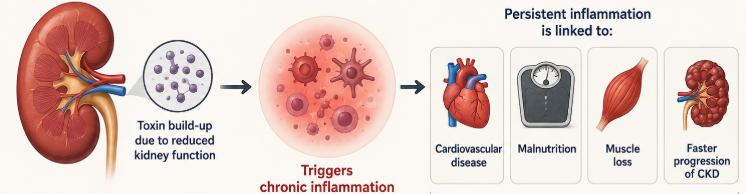
This is why protein management is considered an important part of renal nutrition.
A common misconception is that people with CKD should stop eating protein altogether. However, this is not true.

Protein remains essential for:
The goal is not to avoid protein, but to consume the right amount and choose suitable protein sources based on individual needs.
There is no one-size-fits-all approach to protein intake in CKD. Protein requirements vary depending on several factors, including:

People who are not on dialysis may often require a controlled protein intake. On the other hand, patients undergoing haemodialysis or peritoneal dialysis usually need more protein because dialysis can remove amino acids and proteins from the body.
Without adequate protein intake, dialysis patients may be at risk of weakness, muscle loss, and protein-energy wasting.

Protein quality is just as important as protein quantity. Not all protein sources affect the body in the same way.
High-quality proteins provide essential amino acids in forms that the body can use efficiently. Examples include:

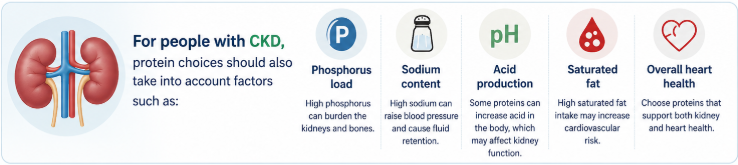
However, for people with CKD, protein choices should also take into account factors such as phosphorus load, sodium content, acid production, saturated fat, gut microbiome effects, and overall metabolic burden.
Modern renal nutrition is not only about asking, “How much protein should I eat?” It is also about understanding which protein sources are most suitable for a particular individual.
A carefully planned renal diet can help:
Protein plays a vital role in maintaining health, even for people living with Chronic Kidney Disease. While excessive protein intake may place additional strain on the kidneys, inadequate intake can lead to malnutrition and muscle loss.
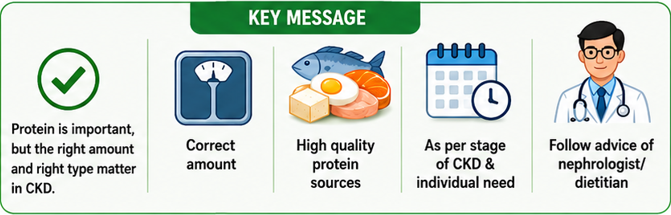
The key is not protein avoidance, but protein optimization. With proper guidance from nephrologists and renal dietitians, individuals with CKD can meet their nutritional needs while supporting their kidney health.

© 2025, Dr. Pratim. All Rights Reserved. Powered By NCIL IT Team